BLOG

The Wildcard Wayer

Wildcard Wilderness offers accessible educational content through gear and product reviews, featured articles, and personal stories.

Featured Blog Articles and Stories

The Role of Bushcraft in Trauma Recovery

Featured Blog Articles and Stories

The Role of Bushcraft in Trauma Recovery

on Jun 15 2026
The Role of Bushcraft in Trauma Recovery Jacks Genega, Founder of Wildcard Wilderness Survival Published in Issue 119 of Bushcraft Magazine The Impact of Being Uprooted When viewing the natural world around you, one may see that we are not so different from the trees that tower over us. There are times when we stand tall and are deeply rooted and steady, but there are times when we also feel strain. There are seasons where we feel bent, broken, or even uprooted entirely. These life disruptions may last seconds to years, but they all leave an imprint. They shape how we move through the world, how we see ourselves, and how we relate to others. In a culture that often avoids discomfort, trauma remains one of the most misunderstood parts of our living experience. It is often minimized, stigmatized, or ignored, yet it is not rare. It is not a weakness. It is human. Yet, like a tree that grows a new limb after injury, we can become stronger, more complex, and more grounded than before. In a world that often feels loud and disconnected, the quiet of the forest offers a powerful space for healing. Through the art of wilderness living, or bushcraft, we not only tend to the forest around us, but to the landscape of our own inner worlds. This inner forest is made of our thoughts, emotions, memories, and instincts. It holds both the tangled undergrowth of fear and doubt, and the steady roots of strength, curiosity, and resilience.  The practice of bushcraft can teach us how to ground ourselves, strengthen our foundation, and stand with confidence. For many, that healing may not happen within structured systems or all at once. It happens outside. It happens slowly. It happens not only through doing, but also through being. It can happen through bushcraft. Understanding the Nut Much like the forest around us, our society relies on structure to function. Our brains constantly interpret the world, forming predictions and rules that guide how we think, feel, and behave. Whether through political, religious, or familial systems, we build frameworks that help us make sense of life and hold accountability.  When trauma hits, it is like a storm tearing through that structure, snapping limbs, splitting trunks, and pulling roots from the soil.  But we are taught to push through.  Instead of processing our pain, many of us absorb and hold on to it, developing a longing for belonging in a world that tells us to get over it and move on. Just as a tree’s rings hold the memory of every drought and storm, we carry our experiences within our nervous systems.  In order for us to truly understand those with trauma, we need to stop asking each other what is wrong with them, and start asking what has happened as every moment in life is built on all the moments before.  The life of a tree is all contained within its seed, so in order for us to understand the hickory, we must try to understand the nut. It helps to look at the brain. Our brains are made up of interconnected systems that work together to shape how we experience the world. Some regions are responsible for basic survival functions like breathing and heart rate. Others are deeply involved in processing emotions such as fear, anger, joy, sadness, and even connection, while also helping us store and recall the memories tied to those experiences. The prefrontal cortex, which continues developing into our mid twenties, plays a key role in decision making, problem solving, and regulating how we respond to those emotions. This is why trauma can shape how we see ourselves and how we think, feel, and respond to the world, especially when it happens early in life, before those regulatory systems are fully developed. Research shows that trauma can physically impact the brain. The hippocampus, which plays a key role in memory formation and stress regulation, can shrink, making it difficult to process and organize experiences. The amygdala, responsible for detecting threat and triggering fight or flight responses, can become overactive, heightening fear and emotional reactivity. When we experience trauma, the systems involved in threat detection and emotional processing can become more reactive. Fear can feel heightened. Anger can surface more quickly. Sadness can feel heavier or harder to move through. At the same time, the parts of the brain responsible for regulation, reasoning, and perspective can become less effective. In response, people often reach for ways to soothe these symptoms, trying to quiet what feels overwhelming or out of place.  Those with trauma will struggle with what they deserve and instead might run away from their distress and turn to self sabotage as a means of coping. But masking the pain does not resolve it. If those experiences remain stored and unprocessed, the body can stay locked in a cycle of fear and stress. There are only so many trees that can fully grow in tainted soil. But just like soil can be restored, the brain can change. When we begin to safely release and process stored emotions, the brain can shift. The amygdala can calm. The hippocampus can regain function. New pathways can form. The question then becomes, how do we do that in a way that feels safe and sustainable? This is where bushcraft can intersect with recovery in a meaningful way. The Forest as a Place of Repair In a world driven by speed, noise, and constant input, the forest offers something radically different. It offers quiet. It offers rhythm. It offers a space to release. Instead of struggling to fit in, nature is where we belong. When someone is in a state of fight, flight, or freeze, the lower parts of the brain are in control. In that state, reasoning is not accessible. What the body needs is rhythm, safety, and sensory input that brings it back down. Nature provides this immediately through the movement of water, flowers swaying in the breeze, and the changing of light.  Spending time in nature has measurable effects on both the body and mind. It lowers cortisol, helping shift the nervous system and mood by reducing anxiety and depression, while also enhancing focus, memory, and problem solving through what’s known as attention restoration. Exposure to natural environments can support immune function, reduce inflammation, and improve cardiovascular health, while natural light helps regulate sleep cycles.  The forest becomes more than a setting. It becomes a participant in the healing process. Regulate, Relate, and Reason There is a well established approach to trauma recovery described by neuroscientist, Dr. Bruce Perry, as the 3 R’s: regulate, relate, and reason. It reminds us that healing does not start with logic. It starts with the body. Regulation comes first. Bushcraft, or the art of wilderness living, is more than a collection of skills. It is a way of engaging with the natural world that requires connection. Whether it’s tool construction, medicine procurement, food procurement, shelter building, fiber arts, or fire construction; bushcraft allows our relationship with the natural world to grow, effectively promoting our relationship to the self to grow in an environment rich in active and passive repetitions.  Whether building a fire, shaping wood, or navigating terrain, each of these rhythmic activities demands awareness and creates steady, predictable input that calms the body.  That repetition matters. The steady motion of shaping a wooden spoon. The patience required to foster a flame into existence. The observation needed to read the land. These are not just practical skills. They are regulating experiences. They slow the nervous system. They bring the body out of stress and into rhythm where our stored emotions are transfigured into brilliant masterpieces. Primitive skills repair the primitive brain. Without needing to force anything, the system begins to settle. Once we are regulated, we can begin to relate. This is where community comes in. The limbic system, which processes emotion and attachment, responds to safety, presence, and trust. Building a shelter, starting a fire, or preparing food together requires cooperation and shared experience.  There is no pressure to perform. No need to prove anything. Just a steady, non judgmental space where people can feel seen, understood, and supported. This connection is vital in trauma recovery, as strong relationships provide emotional safety, reduce feelings of isolation, and help reestablish a sense of belonging. It allows the body to fully come out of survival mode. It rebuilds trust not only with others, but with the world itself.  Now we can begin to reason. When the body is calm and connection is present, the higher brain becomes accessible again. This is where reflection and problem solving can take place. Bushcraft offers a natural entry into this stage through tangible experience whether it's a fire you build, a shelter you created, or a skill you developed through repetition. These are real, lived experiences that reinforce capability. Growing Confidence Through Skill Confidence is often discussed as something that can be built through mindset alone. But in the wilderness, confidence comes from experience. You either make the fire or you do not. This honesty and accomplishment are what makes skills so powerful. The warmth of a fire you built, the shelter you crafted, or a meal you foraged from the forest floor can all reignite a sense of achievement and purpose. You are not just gaining a skill, you are gaining proof. Proof you can learn.Proof you can adapt.Proof you can rely on yourself. And by proving to yourself that you are capable, gives you integrity, something that is often lost when navigating trauma. The reward isn’t just comfort, rather it’s identity. It’s the shift from “I am broken” to “I can do hard things.” Every spark you strike from steel becomes a spark of purpose. Every knot you tie, every bow you carve, is a vote for the person you are becoming. In this way, bushcraft is not just about survival. It is a pathway with regulation, connection, and growth. Because while fear may always exist, it does not have to control us. We do not move on from our trauma. We must move through it. And through that process, we begin to step back into a place of agency, where we are no longer defined by what has happened, but by how we choose to move forward. The confidence gained through skill does not stay in the forest. It carries into everyday life. Bushcraft Belongs to Everyone Around shared fires, during group builds, and through collective learning, people form connections that go beyond the skills themselves. There is a sense of belonging that emerges. Not from fitting into a predefined role, but from contributing to something shared. And for many, that sense of belonging is just as important as the skills they are learning. It provides support. It provides perspective. It provides a reminder that growth does not have to happen alone. Bushcraft is not reserved for a specific type of person. It does not require a certain background, identity, or level of experience. The wilderness does not judge. It does not exclude. It responds only to engagement. And for those willing to step into it, it offers something increasingly rare. A chance to slow down.A chance to reconnect.A chance to rebuild. And a chance to know that it is okay to be a total nut. Because from every nut, a mighty tree can grow. For more class reviews, gear reviews, trail stories, class updates and more! Follow Wildcard Wilderness on Facebook, Instagram, TikTok, and YouTube! #survival #wildernessskills #wilderness #outdoorlife #woodsman #wildcard #neverlost #womeninbushcraft #onthetrail #wildcardjacks #wildcardwilderness   
The Courage to Explore: Land Navigation Class Review

Featured Blog Articles and Stories

The Courage to Explore: Land Navigation Class Review

on Jan 06 2025
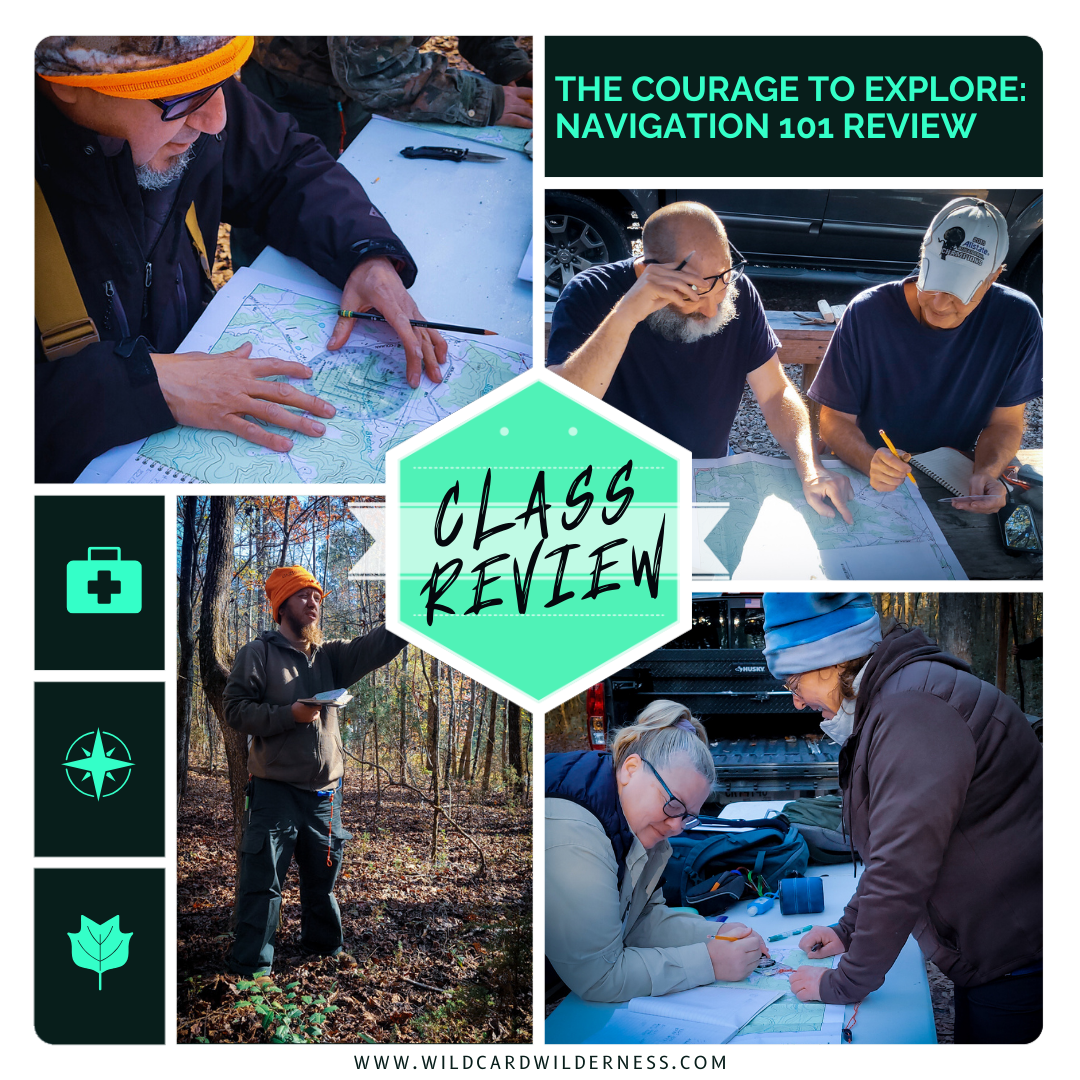
There is a profound sense of empowerment that comes from learning how to navigate the wild unknown without the use of technology. My personal journey into using a map and compass began when preparing for a solo expedition across Scotland’s West Highlands and Cairngorms in 2018. The right to roam and the ability to wander off trail allowed me to lean into curiosities about Scotland’s landscape and history that may not have happened without this knowledge in “lost-proofing.” I believe that the art of land navigation is a critical skill, along with a strong foundation in wilderness medicine, that every hunter, hiker, bushcrafter, or everyday explorer must be educated on before immersing themselves off the grid in the great outdoors.   When asked to teach the Navigation 101 course for Georgia Bushcraft, I was beyond elated as land navigation is one of the first skills I developed on my “rewilding” journey and affectionately described as going back to my “roots” when leading an intensive solely on this skill.  Navigation has become essential to who I am today as it allowed me to lessen my fear of getting lost and feed my “wanderlust,” or desire and courage to roam and roam freely. To solely immerse yourself in the beauty of nature without fears and limitations brings an indescribable sense of wonder and freedom that fosters resilience and agency beyond guided travels. It was a privilege to be able to share this passion with those with the same taste for adventure, ready to tackle insecurities. and dedicate themselves to proper skills training.   The course began early on Friday morning at the Georgia Bushcraft Basecamp, an outdoor classroom surrounded by multi-story Mulberries, Maples, and Sweet Gums whose leaves were barely holding on from Autumn’s abscission. Our group of ten, a mix of hikers, hunters, bushcrafters, and retired army veterans, gathered around hungry for knowledge but still with hints of nervous tension as this art can be intimidating for some. As their instructor, I aimed to set the tone with reassurance sharing my personal experiences hiking through the Alps and across the Arctic; and laying out an overview of the weekend’s agenda: parts of a compass, map reading, terrain association, grid plotting, self-mapping, navigating by the sun and stars, and various practical exercises.   We started with an in-depth overview of navigational concepts, compass anatomy, and then its multiple uses beyond finding and following azimuths. By the afternoon students were equipped with travel logs and ranger beads, ready to travel safely through the woods conquering numerous courses varying in difficulty from the number of checkpoints to difficulty in terrain. That evening, back at basecamp, we shared our experiences over a shared fire and students gained tips on how to find cardinal direction from observing certain celestial bodies. Saturday morning, I handed out topographic maps and protractors, explaining declination, how to read contour lines, identifying terrain features, and calculating distances. I emphasized the importance of understanding scale and orienting the map. For many of the students, it was a reminder of just how dependent we’ve all become on modern technology like GPS devices and various phone apps. "Technology can fail," I told them. "But knowledge weighs nothing and skills can last a lifetime as long as they are maintained much like your tools.” By mid-morning, they were practicing in pairs, plotting points and planning routes, to find specific trees or toys scattered across the forest floor. This newfound knowledge was not easy to digest for some, as they had to recalculate their distance and bearings; however, the dedication to the craft was strong and lessons from mistakes were learned. It wasn’t long until I could see their confidence growing and their curiosity for off-grid adventure begin. One student, Bowdier Sackett, said “Navigation 101 with Jacks was more than a class on navigating, it was a class on confidence building and applying it. Jacks is a very knowledgeable and patient teacher. She made every part of this class fun and interesting. I would not hesitate to recommend or even to take the course again.” On Sunday morning, the sun was shining allowing for a module in primitive navigation, or how to navigate by the sun and shadows. Simple methods in finding cardinal directions and advanced techniques to determine actual azimuths were discussed and practiced. Kenny Brunswig, Founder of Grumpy Bushcraft, and the resident medic for the weekend’s module, said, “Coming from a military background, this was the most comprehensive and easily understood land navigation course I've taken. The information provided was extremely easy to digest and also use. The primitive navigation module was very interesting. Despite carrying a compass or GPS, knowing that I could find cardinal directions with nothing if I had to brought a profound sense of comfort.” Other conversations around modern devices and signaling for rescue were had before students set out for further and more difficult exercises armed with maps, compasses, travel logs, and skills. The sense of accomplishment from these students was immeasurable and it didn’t go unnoticed how they blossomed into confident outdoorsmen, proving to themselves, others and myself that they could get their bearings and find their footing. Land navigation is more than a skill, it’s about mindset and trusting your training when it comes to troubleshooting. It’s this trust that builds confidence, a renewed sense of self-reliance, and a deeper connection to oneself and the wild. It’s been said before that if you prepare for the worst, then you can hope for the best and truthfully, I’ve never been a huge fan of this phrase because I believe that hope should never be a contingency. I prefer the phrase, if you prepare for the worst, then you can prepare for the best. As I said earlier, I truly believe that land navigation is crucial when preparing for venturing off the beaten path, and I encourage everyone to take the first step. Land Navigation Class Review byJacks Genega, Founder of Wildcard Wilderness Survival For more class reviews, gear reviews, trail stories, class updates and more! Follow Wildcard Wilderness on Facebook, Instagram, TikTok, and YouTube! #survival #survivalskills #navigation #survivaltips #suunto #wildernessskills #wilderness #outdoorlife #woodsman #wildcard #neverlost #womeninbushcraft #onthetrail #wildcardjacks #wildcardwilderness #LearntoNavigate #LandNavigationClassReview .  
STORY: Kungsleden Trail Review - Summer 2023

Featured Blog Articles and Stories

STORY: Kungsleden Trail Review - Summer 2023

on Dec 31 2024
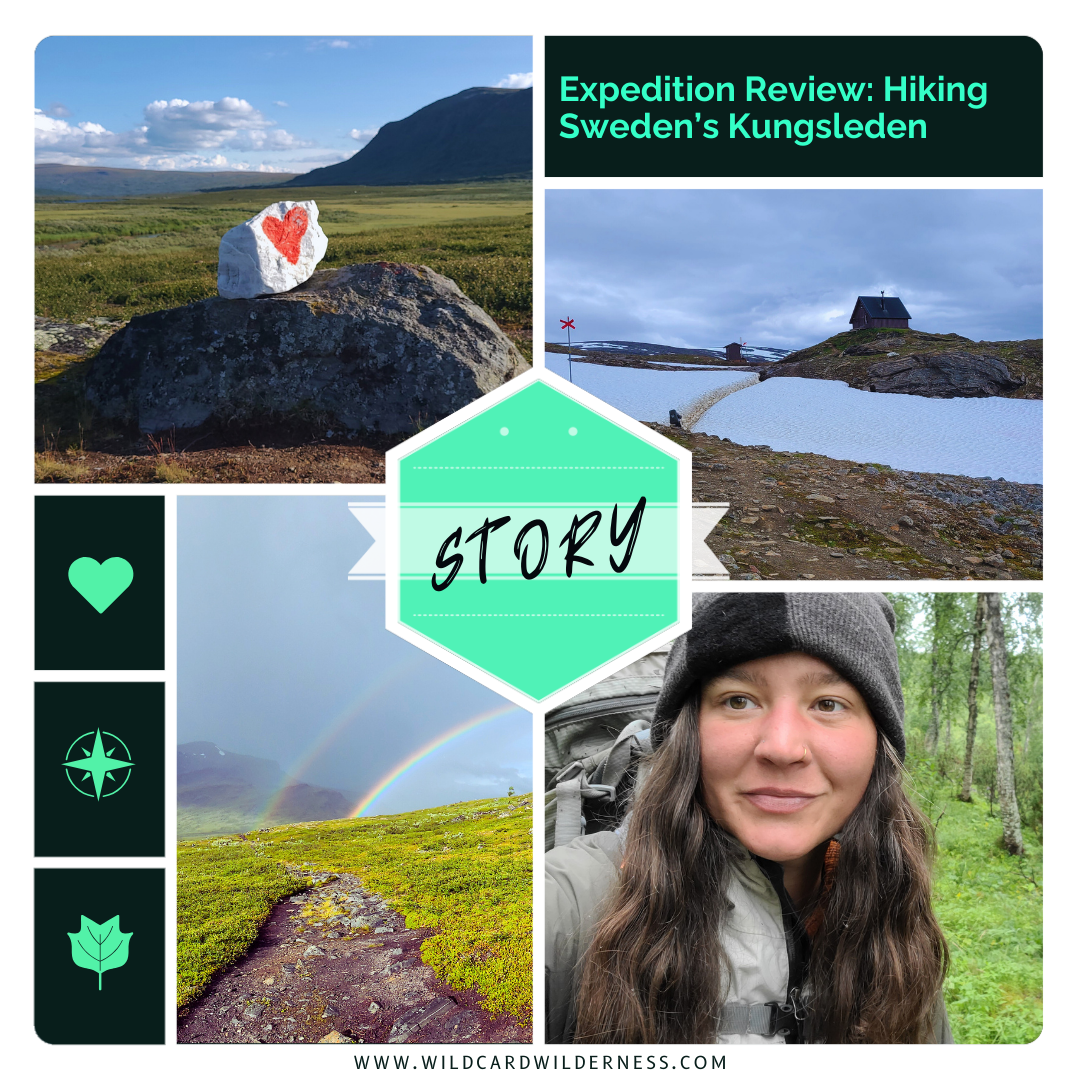
The Kungsleden has been a dream of mine since I began deep diving into the world of bushcraft in my mid-30s. Many of my interests trace back to the Sami, the nomadic indigenous people of Sweden and other parts of Northern Europe. The Kungsleden, or “The King’s Trail” is a 460+km walking trek that spans from the northern tip of Sweden’s Lapland region in Abisko and through four national parks, Abisko, Stora Sjöfallet, Sarek, and Pieljekaise, and ending in the small town of Hemavan.   For me, this trail seemed like the ultimate pilgrimage as you trek through the Arctic Circle, Sami lands, mountainous terrains, lake crossings, and dense forests. One can not discredit that this region remains very much untouched by man and belongs to the moose, wolves, wolverines, foxes, lynx, and bears that inhabit its landscape. Reindeer are still herded by the Sami and it's important to note that it is disrespectful to interfere with the tribes, their villages, and their herding. I was initially planning to set foot on this trail in 2020 when I was living in The Netherlands, but Covid restrictions and trepidation got the best of me. With some continued training in wilderness survival and an opportunity to travel overseas to speak at a festival in 2023, I finally felt prepared to pursue it. I planned my gear according to the challenges one could face and brought additional items aside from my traditional packing list. Extra thermals, plenty of food, a fixed blade knife, a Garmin inReach, a stainless steel canteen, and a map and compass were some of these extras. I was boasting with excitement and bursting with butterflies as every expedition comes with unforeseen challenges. I think the part of this journey I was so fearful of, other than the frigid Arctic temperatures or the potential for a moose trampling through my camp, were the several lakes one must row across being mindful of wind, underwater obstacles, and the chore of towing an additional boat for fellow hikers to use. There really is only one way I have been able to talk fear out of taking control and that is to trust your training, believe in the possibility of a transformative adventure, and "ripping the Band-Aid off" by taking the first step. The first leg from Abisko to Nikkaluokta was gentle in parts with picture-perfect birch forests and well-marked paths loaded with foot traffic as this section is a common holiday for Swedish Tourists wanting to ascend the country’s highest peak, Kebnekaise. But quite frankly, this section was also brutal when it came to the glacier crossings at Tjäktja, the gale-force winds bulldozing through the vast mountain passes, UV rays stronger than laser beams and never setting as it was the land of the midnight sun, and an unforgiving rocky terrain that made one prefer to walk in mud compared to the sharp boulders beneath. On Day 3, in Sälka, the winds were so bad that tenants at this shelter were urging hikers not to continue to Singi as it was deemed too dangerous. I took their advice and sought refuge in one of their bungalows where other travelers from around the world and I played card games by candlelight sharing battle stories from previous expeditions and huddled around my Garmin to tune in to neighboring lightning strikes. That night, someone hung their rain jacket a bit too close to the wood stove and it was set ablaze and the fire quickly spread to the roof and neighboring walls. Luckily, the pots of water available for dish-washing were near and the fire was no longer a threat. This moment only proves that you never know when a mistake could become a menace. The following section, Nikkaluokta to Saltoluokta, was when fellow hikers and shelters became scarce and the journey deeper into the Laplands transitioned to solitude. Out on the trail, I am consistently mystified by deep connections with the wilderness and the human soul. It's where the boundary between us and the wild becomes thin and nature becomes a mirror allowing one to have a closer look at what lies within. They say trauma is stored in the body and parts of our primitive brain, and it's through regulation and rhythm that we can release the energy imprinted on us from these catastrophes; but I’ve never been one for repetitive methods like yoga or dance to help release the grip that grief can have. It’s body movement from hiking that has helped break these obstructions and witnessing powerful healing rhythms in nature that have allowed me to be released. During this summer I was still suffering an insurmountable amount of grief from the loss of my mother and from individuals affecting my outlook on who I was inside. I was riddled with sorrow, anxiety, doubt, and insecurities about myself and also my pursuit in a career change, one that I hoped would help others. Who was I to send others on a path to healing, when I struggled to do the same for myself? Was I even capable of moving forward from these griefs? My heart was in so much pain and I had a difficult time terminating my permission that allowed myself to be hurt and others to hurt me. It’s out on the trail I could release these emotions safely with no judgements, and nature had a strange way of listening. Sometimes I would cry to release some of this stored trauma, and then it would rain. It was as if the universe was telling me to let it out. And when I did, it gifted magnificent sights of rainbows and the clarity to look closer at all the rhythms flowing outside and in; the streams, the wind, my heartbeat, and my breath. With every inhale I would breathe in possibility, and every exhale blockages and doubts. With every tear, I felt a little bit lighter and ready to be filled with the messages nature was waiting to share. The next two sections, from Saltoluokta to Ammarnäs, were demanding for those attempting The Kungsleden’s seemingly endless reach. This long and remote stretch required hikers to be vigilant with their surroundings. Resources for fire were slim, lake crossings were abundant and needed to be planned with caution, mosquitoes traveled in clouds ready to blood drain, and GPS signals were weak and rare. I had to carefully navigate by terrain association and would sometimes need to triangulate my position with a map and compass. When resources for fire were near, like birch bark, fatwood, or spruce resin; fire was still difficult in the everlasting damp conditions. The best way for me to make lakeside fires was by making feather sticks with my LT Wright and shredding my plastic meal bags for an accelerated tinder. The importance of self-reliance was not to be understated, but every obstacle enlivened my spirit knowing that I could rely on the skills I have developed. Long stretches of birch forests and sunshine, the abundance of blueberries and cloudberries, the expansive tundra, virescent moss-covered valleys, towering mountain summits, endless bridges crossing rushing rivers, and the occasional curious grouse visiting outside my tent walls made the experience completely surreal and became rewards to the hardships endured and healed my heart. One day before figuring out where I was going to set up camp and build the evening’s fire, a larger visitor made their presence known. I could feel heavy stomping vibrations through the dirt, knowing something was near before even seeing it. I thought for sure this was my moment to see a moose, but instead, a rogue reindeer, one that left the herd, bust out of the brush and hopped onto the boulder I was just planning my route on. Aggravated that I was in his territory, he snorted repeatedly as I backed away slowly through the trees nearby. Later I set up camp along a river and as I was collecting water I could sense movement in my peripheral vision. Low and behold, he was back. He seemed less bothered than before and we were now in a shared space. He walked up to my tent, curious about my wool socks airing out to dry and sniffed around my belongings before proceeding to urinate on my tent and then wandering back into the woodline. I took this as him granting me permission to stay but clearly advertising he was king and I was lucky to be allowed to stay. The final leg of the trail, from Ammarnäs to Hemavan, is the southernmost part of the trail rich in lush lichen growths and dancing crane congregations. The conditions were beyond boggy as the muddy meadows could swallow you whole. Despite having passed the Arctic Circle line and entering warmer weather, the heavens opened unleashing torrential rain on the travelers making their final sprint to the trail’s finish. On the final day, I ascended one final steep summit before lowering into Hemavan’s valley and was met with freezing temperatures and precipitation. The risk for hypothermia was high with constant rainfall and hail. My ego told me to push on to the end to maybe meet the possibility of a warm bed and bragging rights for having finished the trail earlier than expected, but my survival training course corrected my stubbornness when my teeth began violently chattering and finger dexterity worsening. I knew my core temperature was rapidly dropping. Instincts kicked in and I set up my tent immediately, peeled away many soaked layers, and curled next to a bottle of hot water in my canteen. I laid there waiting to unthaw, nibbled on the last bit of my reindeer meat, and after warming up slept in solitude one last time before reaching the trail’s end the following morning. Having completed The Kungsleden was bittersweet. I was exhausted physically having hiked nonstop for 21 days carrying upwards of 50 pounds of gear; I was exhausted mentally as moments of doubts and memories of trauma were slowly squeezed from my brain, but my soul body was elated and enlivened with the joy of curiosity and a newfound love flowing through all parts of me. Solo hiking the trail was more than a test in endurance and skills, but it was a path inward that fostered forgiveness around the loss of my mother, compassion for the least expected of individuals, and resilience that gave me my confidence back. It was an experience that broke the boundaries between myself and the natural world, for I wasn’t just a part of it, I embodied it. I hope to carry this narrative and medicine forever. For more class reviews, gear reviews, trail stories, class updates and more! Follow Wildcard Wilderness on Facebook, Instagram, TikTok, and YouTube! #SurvivalSkills #OutdoorAdventure #Preparedness #SurvivalTraining #WildernessSurvival #Bushcraft  #OutdoorSkills #survivalcoursesusa #selfreliance #offthegridlife #outdoorlife #exploremore #EmergencyPreparedness #AdventureAwaits #LiveOffTheGrid #Survivalist #NatureLovers #ExploreMore #StayPrepared #LearnSurvival #womeninbushcraft #wildcardjacks #wildcardwilderness #LearnWithWildcardJacks #kungsledentrailreview
COURSE REVIEW: Women's Survival Class - March 2024

Featured Blog Articles and Stories

COURSE REVIEW: Women's Survival Class - March 2024

on Apr 03 2024
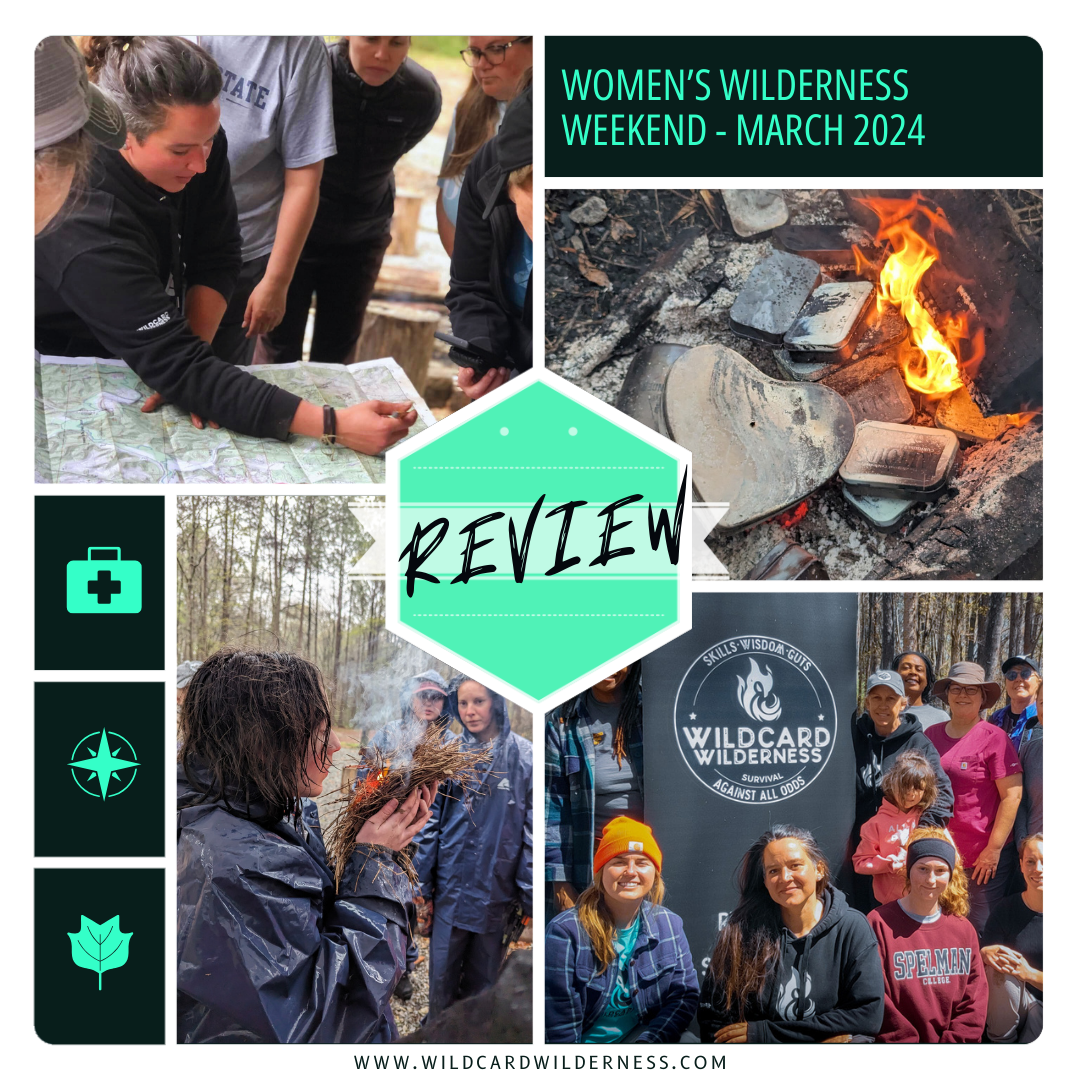
It’s Friday morning in late March at the Georgia Bushcraft LLC property in Watkinsville, GA; and the Sweetgum and Tulip Poplar buds are ready to burst alongside the Redbud flowers already ripe for the picking. Eighteen women arrive prepared to brave the inclement weather on the menu for 2024’s first Women’s Wilderness Weekend led by yours truly, Jacks Genega. A vote was taken upon arrival on how best to utilize the day’s shifting windows of rain and drizzle. Option A was to stay the course and learn about how best to build fire from your kit and off the landscape (knowing that fire was going to be a harsh learning curve to achieve in wet weather conditions) or Option B was to focus on navigation and leave fire for sunnier skies. All hands rose for Option A. “This was my kind of crowd,” I thought. When approached to teach an all-women’s survival course for Georgia Bushcraft, I couldn’t have been more thrilled or honored. I have had many mentors throughout my training that I would consider father figures, but I never had one that was like a mother. I think most women want to be self-reliant in the wilderness and push themselves out of their comfort zone but just don’t know where to begin or think they don’t have the strength or confidence to do it. I am of the belief that it doesn’t take a lot of skills, or a lot of strength to do anything, you just need to be perseverant. Knowing what you are capable of physically and mentally is not a boundary, but a tool. No one has to be an expert or a master of a trade to do great things, they just have to know what they have to work with, how to use it, and go from there. To lead a course directed to all women allowed me to give the additional guidance I wish I had years ago. After some brief modules in cutting tool safety and self-aid, led by Becky Christopher, Co-Founder of Lostways Survival and Homestead, our appointed medic and Assistant Instructor for the weekend, it was time to forage our tinder of fatwood, punkwood, and whatever the forest floor had to offer. Alas, heavy rains showered upon us all but flame was nonetheless obtained with careful selection and processing. It is entirely false to think that fire can’t be achieved in the rain, but with the right materials, tools, and skill, anyone can do it. Tammy Nelon from South Carolina said, “I [...] enjoyed every minute of the weekend. Jacks’ experience has given her a wealth of knowledge and incredible stories to tell. Jacks makes the skills learning accessible and fun.” The morning of Day 2 allowed those to master ferro-rod and firesteel even further before jumping into a lecture about navigation. I don’t consider navigation a survival skill but it is one that will prevent you from getting into a SHTF scenario in the first place. Navigation is a way of “lostproofing,” a term coined by Craig Caudill from Nature Reliance School. If you don’t have a compass in the woods, then learning how to read your environment like wind direction or plant and tree growth, along with following your intuition, can aid one in finding your direction of travel, like the way back to your car. The wilderness is secretly whispering words of wisdom whether it's telling you where you are, what lies around the corner, or what lies within you; you just have to be open to listening to it. On Day 3 the skies cleared which allowed us to catch up on solar fire, emergency shelter building, and a module in self-defense. I believe that self-defense is a subject not often discussed in the world of wilderness survival and sadly, the issue of safety is high ranking as one of the reasons there isn’t more female participation in the outdoors. Much like our cutting tools, combustion devices, cordage, containers, and coverage; carrying a self-defense weapon like a firearm or bear spray is essential for outdoor adventure. Being mindful of the wind, I discharged bear spray to show the range it can have if one were in a predatory situation. If carrying a self-defense tool is going to lessen your fears, build some guts, and get your butt out in the woods, then by all means carry it! This course allowed us to have tough conversations with each other and ourselves, learning that vulnerability doesn’t have to be a crutch, rather it can be fuel. Lindsy Falukenberry from South Carolina said, “It was apparent Jacks’ passion for empowering women to feel confident in themselves and the skills they have; and she didn’t gloss over the hard subjects either. We had round table discussions where we felt safe to connect with one another and develop a sense of community.” As the day came to a close, students were encouraged to participate in a fire challenge and to gather materials ready to build a roaring sustainable fire. Every team completed the task using their newly developed skills and determination. Before taking our class photo with myself, Becky, and all 18 participants beaming with a sense of resilience through self-reliance; I asked everyone to take a moment to sit in nature for ten minutes in solitude and report what they observed. No student was shy of exclaiming how they felt more connected to nature, to themselves, and empowered by what they have learned. One student, Greer Peters from Georgia, said, “This class changed my life. I can’t wait to attend another course and become a lifelong learner. Thank you for making this possible!” So when it comes to exploring the Great Outdoors, and the many gambles it could bring like weather, wildlife, injury, or getting lost; this class is a stepping stone to realizing that it only takes a little bit of skill, a little bit of wisdom, and a little bit of guts to be a wildcard and overcome tough obstacles against all odds. -Jacks Genega, Founder of Wildcard Wilderness Survival #survival #bushcraft #wildernessliving #wildernessculture #optoutside #wildcardwilderness #womeninbushcraft #georgiabushcraft #womenssurvival
MY LUCKY GOOSEFOOT

Featured Blog Articles and Stories

MY LUCKY GOOSEFOOT

on Mar 28 2024
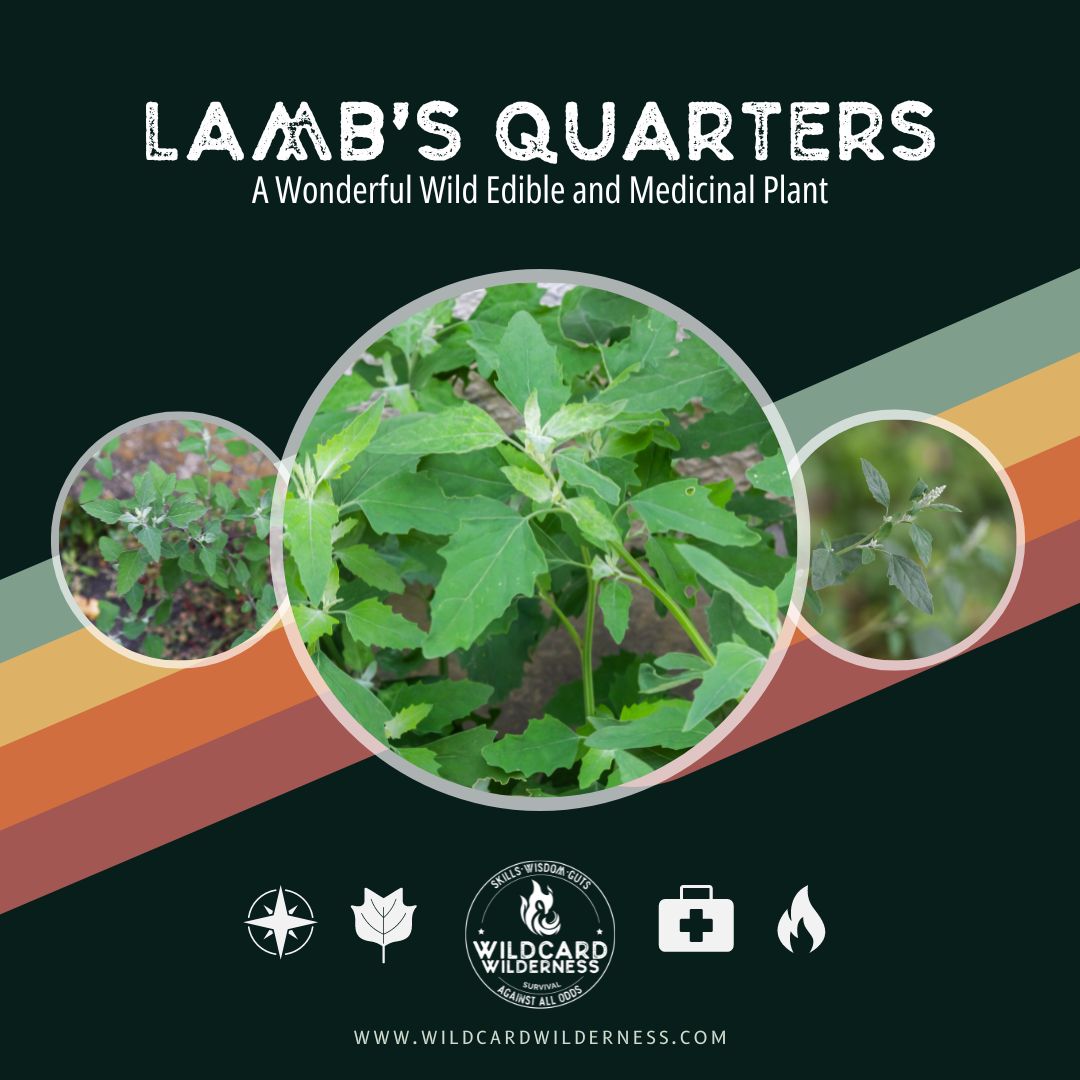
Lambs quarters, also known as goosefoot, is a common and often unsightly guest in our gardens, but boasts a surprising amount of nutritional value and medicinal benefits. 1. Nutritional Powerhouse:Lambs quarters is a nutritional champion, particularly rich in vitamins and minerals. It's loaded with Vitamin A, exceeding even spinach in content. It's also a great source of Vitamin C, calcium, iron, and protein. This profile translates to potential benefits for overall health and immunity. 2. Digestive Aid:Traditionally, Lambs quarters leaves have been used as a tea to soothe digestive issues like diarrhea and stomach aches. The plant might possess laxative properties as well. 3. Anti-inflammatory Potential:Lambs quarters may have anti-inflammatory properties due to the presence of flavonoids. These compounds can help alleviate symptoms of arthritis and rheumatism. 4. Skin Soother:Topically applied Lambs quarters poultices, made from crushed leaves, have been used traditionally to treat minor skin irritations, insect bites, and even sunburn. WooHoo! 5. Urinary Tract Relief:Some sources suggest Lambs quarters tea might be beneficial for urinary tract health. Important Considerations: While Lambs quarters are generally considered safe for consumption, it's advisable to consult a healthcare professional before including it in your diet, especially if you have underlying health conditions or are pregnant/breastfeeding. Certain parts of the plant, like the seeds, may contain higher levels of oxalates, which can be harmful in large amounts. Cooking Lambs quarters can help reduce oxalate content. It's crucial to properly identify Lambs quarters before consumption to avoid similar-looking poisonous plants. Remember:While Lambs quarters offer potential health benefits, it's not a medicinal cure-all. It should be seen as a potential dietary supplement and not a replacement for professional medical advice.Further Exploration:For a deeper dive into Lambs quarters' medicinal uses, consider consulting reputable herbal resources or reaching out to a qualified herbalist. Please allow me to recommend some elite masters to follow: Dr. Mark Merriweather and Dr. Nicole Apelian. Also, here are some books I highly recommend on the subject: Recommended Plant Books#plantmedicine #outonthetrail #foraging #optoutside #wildedibles #homesteading #wildharvest #medicinalplants #survivalmedicine #womeninbushcraft #bushcraft #survival
I got 99 Problems, But Birch Ain't One

Featured Blog Articles and Stories

I got 99 Problems, But Birch Ain't One

on Mar 28 2024
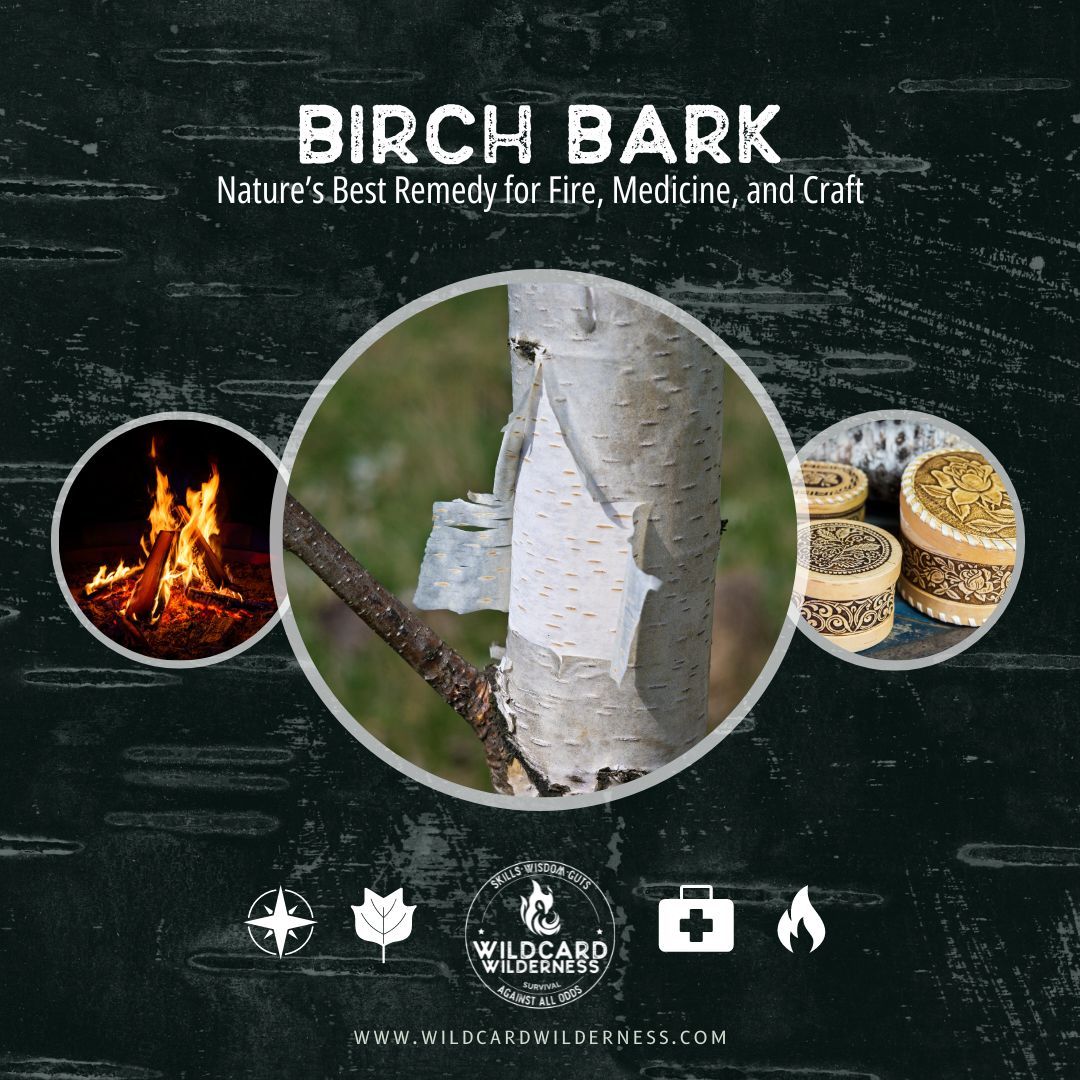
Birch Bark: A Lifesaver for Wet Weather Fire Starting Have you ever been caught in the rain and struggled to start a fire? Birch bark, especially from Yellow Birch trees, can be your hero in such situations.But Birch trees offer more than just fire starting benefits; they're beautiful and ecologically important members of our forests. Identifying Birch Trees Birch trees are widely distributed across the Northern Hemisphere in both the Boreal and Temperate Forests.They're all known for their gorgeous peeling bark. Some common Birch varieties include: Paper Birch (Betula papyrifera): Paper Birch has white bark that peels in SHEETS, and was traditionally used by Indigenous North Americans for making canoes and even used as paper. Silver Birch (Betula pendula): This Birch has a silvery-white bark and branches that droop elegantly, creating a weeping effect. Not my favorite of the birches but beautiful nonetheless. Yellow Birch (Betula alleghaniensis): This birch peels in STRIPS and is the creme de le creme of birch bark used for fire. River Birch (Betula nigra): This birch peels in SCALES and has a pinkish tone to the underside of the bark resembling salmon. Black Birch (Belula lenta): Otherwise known as sweet birch does not having bark that peels well but can the twigs and leaves can be used to make a tea. Yellow Birch: The King of Fire Starting BirchWhile all Birch trees have some level of Betulin oil in their bark, the Yellow Birch (Betula alleghaniensis) is the champion when it comes to fire starting. Its bright yellow outer bark boasts a high concentration of this flammable oil, making it much easier to ignite than other Birch varieties.Why Yellow Birch Bark Makes Fire Starting EasierBirch bark, particularly Yellow Birch bark, has two key properties that make it a fire starting lifesaver: High Flammability:The Betulin oil content in Yellow Birch bark allows it to spark readily, even with a firesteel, under ideal conditions.This eliminates the need for dry tinder, which can be scarce in wet environments. Wet-Weather Performance:Unlike many other fire starting materials, Yellow Birch bark performs exceptionally well even when damp. This is because the Betulin oil is water-resistant, allowing the bark to retain its flammability even in wet weather. Tips for Using Yellow Birch Bark as Tinder Identification:Familiarize yourself with the characteristics of Yellow Birch trees.Look for the distinct yellow outer bark when peeling Birch bark. Preparation:Collect and store a softball-sized amount of Yellow Birch bark in your backpack or survival kit. It'slightweight and packs easily. Fire Starting:Scrape the yellow inner bark with your knife to create fine tinder. Or you can take bundle of it rub it together, or feather it, like you are washing a stain out of a shirt and you this will help break up the fibers. You can then use a ferro rod to ignite the tinder. Birch Trees: Beyond Fire StartingBirch trees are valuable additions to our ecosystems.They provide food and shelter for wildlife, and their fallen leaves decompose to create nutrient-rich soil.The beautiful bark of Birch trees is also a source of inspiration for artists and craftspeople.Birch park has been widely used in various cultures to make all sorts of containers including baskets and sheaths. If you are really in the woods now on how amazing birch bark is as a resource, look up the Slavic tradition of making birch bark jewelry boxes called Tavlinkas. Howl Bushcraft (UK) along with Siegurd van Leusen have a class on this later this year.So, the next time you're outdoors and encounter a Birch tree, take a moment to appreciate its beauty and ecological significance. And remember, if you ever find yourself needing to start a fire in wet weather, keep an eye out for Yellow Birch bark – it might just save the day! #birchbark #birch #birchcraft #firemaking #bushcraft #basketry #barkcontainer #survivalmedicine #wildernessculture #womeninbushcraft #wildcardwilderness